
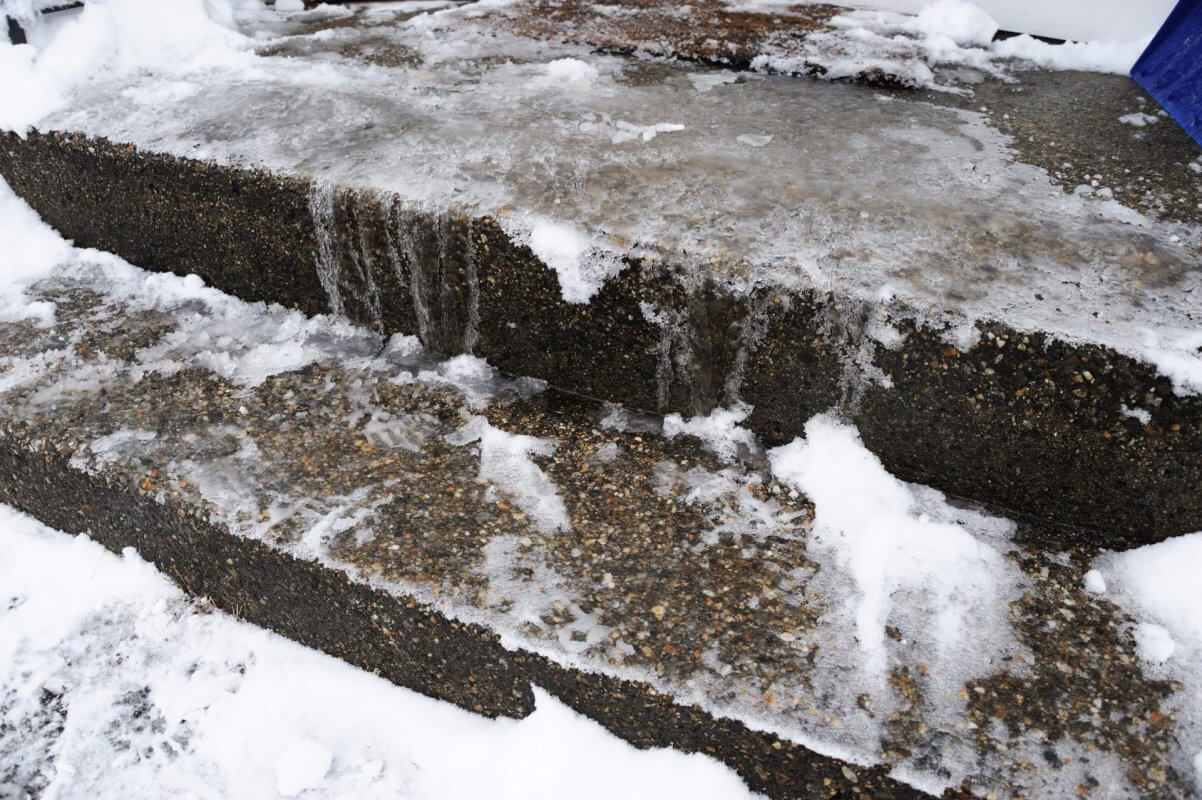
What is the Best Method to Protect Concrete this Winter? As winter is right around the corner, you may begin to wonder what the best method of treating concrete is. Although road salt is the most common method of treating snow and ice, is it safe for concrete? Are there alternative methods to treat concrete? Methods of Treating Concrete Road salt, also known as rock salt, has been used for decades to treat roads and sidewalks during winter. It improves safety for drivers and pedestrians by lowering the freezing point of water, helping prevent ice from forming. However, salt can also contribute to concrete deterioration. During freeze-thaw cycles, water and salt can penetrate the pores of concrete. When temperatures drop, the water freezes and expands, creating pressure that can cause the concrete to crack and break apart. Road salt can also accelerate corrosion in metal infrastructure and vehicles, leading to rust over time. Despite these drawbacks, salt remains one of the most widely used deicing materials in the United States. With millions of tons applied each year, many property owners wonder whether there are more effective alternatives for protecting concrete during winter. One alternative is beet juice. When mixed with salt brine, the sugars in beet juice can help lower the freezing point of water. For best results, it is typically applied before snow or ice accumulates. Unlike traditional rock salt, beet juice is sticky, allowing it to adhere to surfaces rather than bounce away during application. It can also be less corrosive than conventional deicers. However, beet juice has some drawbacks, including higher costs, potential odors, and temporary staining. It also requires sufficient quantities to be effective. Other Solutions Although road salt and beet juice help manage ice, both can leave concrete vulnerable to long-term deterioration. So, how can homeowners and business owners protect their concrete surfaces throughout the winter? One solution is Vetro Fluid, a concrete sealant designed to help protect concrete from moisture, deicing salts, and environmental exposure. Concrete is naturally porous, allowing water and other substances to penetrate its surface. By applying a protective coating, Vetro Fluid helps reduce moisture penetration and minimize damage associated with freeze-thaw cycles and exposure to deicing products. American Construction Specialties offers concrete sealing services using Vetro Fluid to help protect sidewalks, driveways, patios, and other concrete surfaces. Applying a protective sealant can help extend the life of your concrete, reduce deterioration, and preserve your investment through the winter and beyond. Contact American Construction Specialties to learn more about protecting your concrete surfaces. Previous PostNext Post